
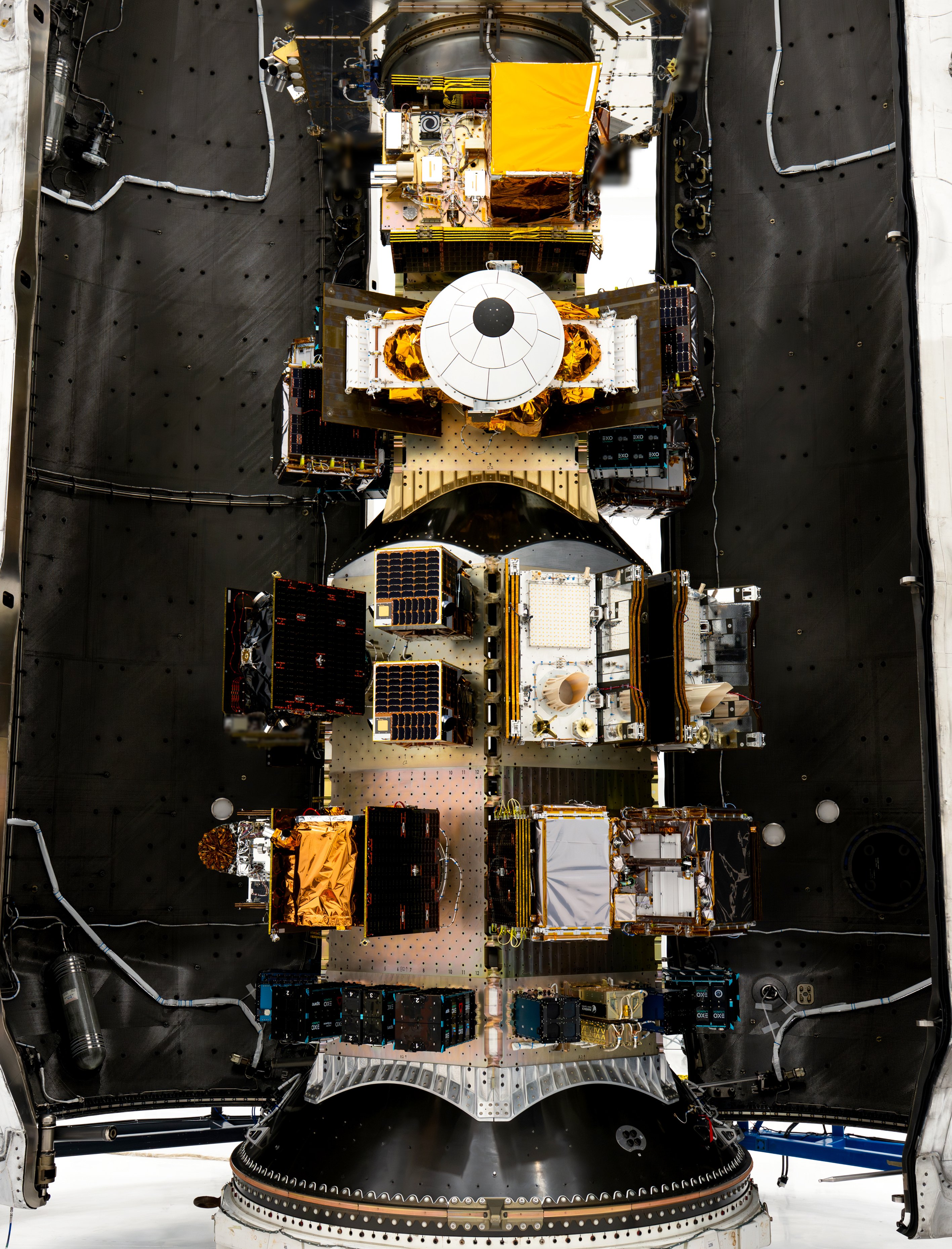

SatVu, the global leader in high-resolution thermal earth observation, today announced the successful launch and orbital deployment of HotSat-2. Launched via Transporter-16, a SpaceX Falcon 9 mission, from Vandenberg Space Force Base at 12:02 BST, HotSat-2 was successfully released at 13:08 BST. The satellite established secure communications within three hours.
While traditional optical and radar satellites identify what is on the ground, SatVu’s thermal technology reveals the activity within those assets. By capturing heat signatures at the highest resolution commercially available, HotSat-2 provides a unique layer of "operational intelligence".
Once the commissioning phase is complete, HotSat-2 will address a critical gap in the intelligence pictures of national security, economic forecasting, and climate resilience organisations all over the world, by providing insights into the operational status of critical infrastructure. The operational status of power plants, refineries, transportation hubs and industrial complexes can all now be monitored with a level of certainty previously unavailable from space.
“High-resolution thermal data is no longer a ‘nice-to-have’, it is a fundamental requirement for modern geospatial intelligence.” said Anthony Baker, CEO of SatVu. “HotSat-2 is designed to measure what is operating, what’s idle, and how those patterns shift over time. For example, if an explosion occurs at an oil refinery, our thermal imagery can look through the smoke to show exactly which units are damaged and which remain online.”
Backed by a high-profile consortium including the British Business Bank and the NATO Investment Fund, SatVu recently secured £30 million in funding. HotSat-2 is the first of two planned launches for 2026: and is the vanguard of an aggressive scale-up toward an eight-satellite constellation. This fleet will provide the rapid revisit times essential for monitoring fast-changing industrial and security environments.
UK Space Minister Liz Lloyd praised the milestone: “SatVu is a shining example of British innovation at its best – and proof that government investment in our space sector pays dividends. The ability to monitor thermal activity from orbit, around the clock, opens up remarkable possibilities for national security, climate resilience and market intelligence.”

